Blue Zircon from Ratanakiri
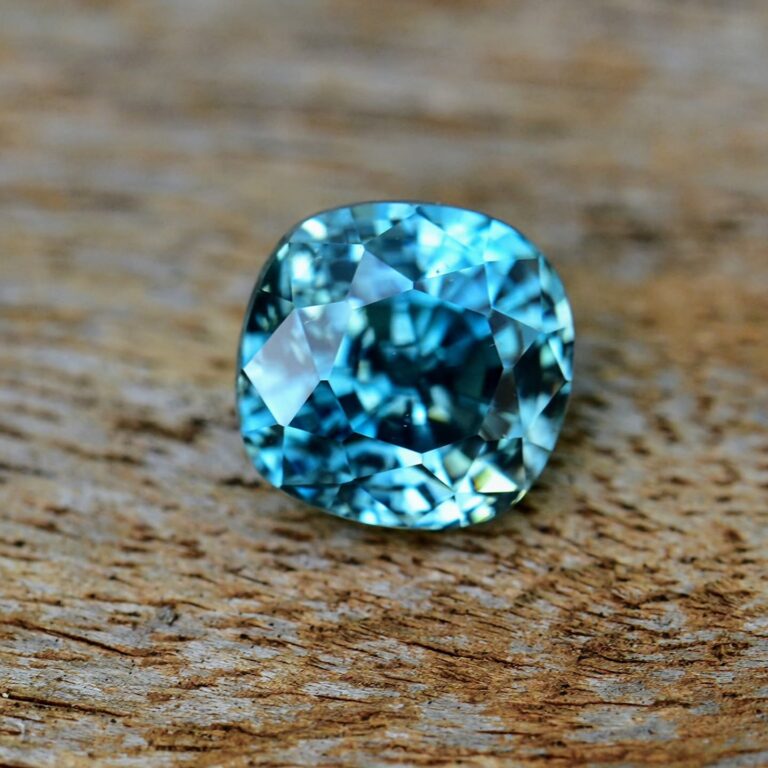
Blue zircon is the stone that put Ratanakiri on the map. Collectors and cutters around the world know this remote province in northeastern Cambodia for one reason: nowhere else do blue zircons appear with this combination of quality, color, and size.
Zircon itself — not to be confused with synthetic cubic zirconia — has an exceptionally high refractive index. That’s what gives it its unmistakable sparkle, a brilliance that outshines even sapphires and rubies. In the right light, a fine zircon shows so much “fire” that it can look almost diamond-like.
The Mining Process
If you travel northeast of Banlung, winding your way from Boloy through Bar Kaev and further down toward Lumphat, you’ll pass through the heart of the zircon fields. These deposits have been mined for decades, yet there is still a surprising amount of material hidden beneath the soil today. Most mines are tucked away inside rubber and cashew plantations — easy to miss unless you know what you’re looking for.
Extraction here looks nothing like an industrial operation. There are no machines, no open pits, no big commercial companies. Instead, small groups of miners work by hand, digging narrow vertical shafts — sometimes as deep as 13 meters — until they reach the gravel layer where the stones lie. From there, they cut horizontal tunnels and connect multiple shafts.
It’s a simple but clever system: linking the shafts provides extra escape routes if one collapses and keeps the air circulating underground. Buckets of soil and gravel are hauled to the surface, washed, and sieved — a process that hasn’t changed much in generations.
Heat Treatment of Zircons
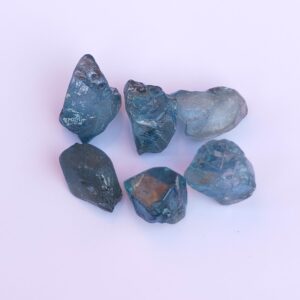
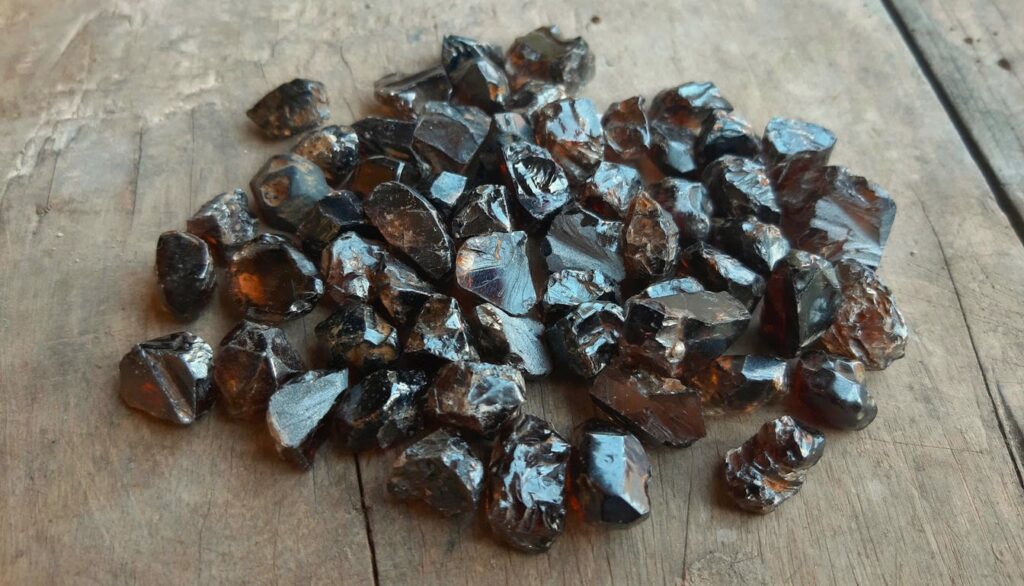
Here’s something that often surprises people: freshly mined zircons are not blue. They come out of the ground orange, brown, even reddish. The vibrant blues that Ratanakiri is famous for only appear after heat treatment — a completely natural enhancement and the standard for all blue zircon on the market today.
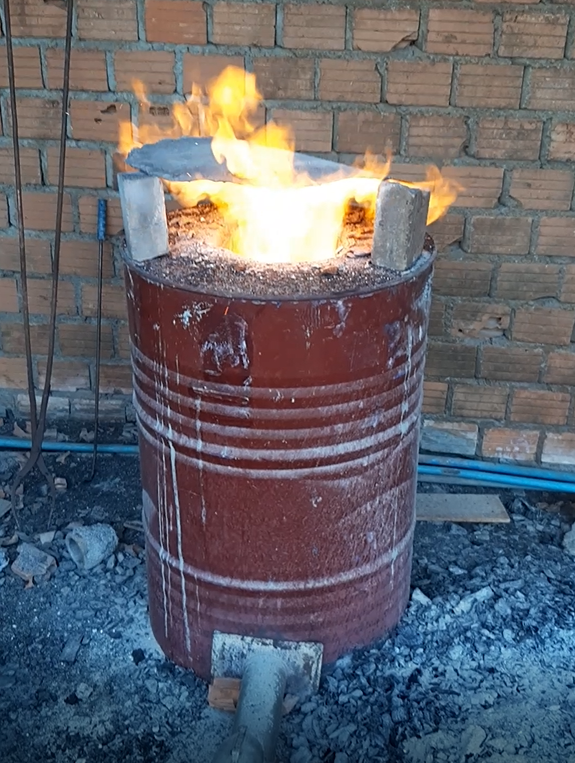
In Banlung, you’ll find simple homemade furnaces built from converted oil drums and fired with coal. The rough stones are packed into a crucible and sealed airtight. That seal is critical: if oxygen gets inside while the stones are being heated, the reaction doesn’t happen and the zircons turn pale instead of blue.
The firing itself is surprisingly quick — just 45 to 60 minutes — but temperatures climb to nearly 1,000°C.
It’s worth stressing that blue zircons are only heat-treated. Nothing is added. No chemicals, no gases, no foreign elements. This is very different from many treated sapphires and rubies, which often undergo much more invasive processes.
From my own years of experience handling zircon — kilos and kilos of rough straight from the mines — I can say with complete confidence: I have never seen a naturally blue zircon. Every cutter and miner I’ve ever met will tell you the same.
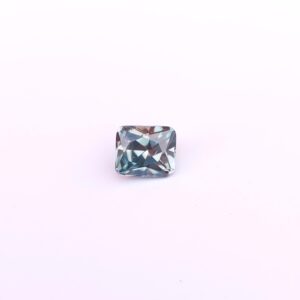
And not every stone reacts the same way. Some come out only faintly blue; others turn white or gray. Those pieces are fired again, this time longer, hotter, and with oxygen. That’s how the striking yellows, reds, and oranges are created.
Zircon properties
Chemical Composition: Zirconium Silicate – ZrSi04
Specific Gravity: 3.9 – 4.7
Refractive Index: 1.78 – 2.02
Mohs Hardness: 6.5 – 7.5
Dispersion: 0.038
Crystal System: Tetragonal